
The Fall of Warner Bros: A Hollywood Tragedy. It seems like everything is crashing and burning these days. Whether it be the economy, politics, or the environment, collapse is now commonplace. In this period of chaos, you would think that some stuff could weather the storm. In particular, entertainment entities like Hollywood could provide relief in this bleak era. Alas, not even entertainment is safe, especially Hollywood. Since the pandemic, most big-budget Hollywood releases have been either disappointments or bombs. It also seems that studios don’t know what consumers want. Hence, they continue to make slop that only makes people angry rather than happy towards their products.
Most studios are stuck in this rut, but none have it worse than Warner Bros. Warner, now under David Zaslav, has made its priority to be the most hated studio of all time. They achieved this by cancelling cool projects, destroying artists’ work, and mismanaging into oblivion. These actions all may seem new to the average filmgoer. However, to people who have been keeping up with Warner, this is only the latest chapter in the iconic studio’s long decline. What’s even sadder about this is that it didn’t have to be this way.
Warner bros is a legendary studio with a large library of classic movies, from Blade Runner to The Wizard of Oz. That’s not even to mention all its TV properties. As well, they seemed to be on fire in the 2000s with massive franchises like The Lord of the Rings and Harry Potter. Now that seems in vain as the studio bleeds money and relevance. So what happened to Warner to leave it in this state? Well, a history of brutal mergers, executive mismanagement, and the decline of traditional media is prevalent in the story of what Warner is in today. Let me tell you more about how Warner went from one of the greatest movie studios of all time to a mockery. It may be a long story, though, longer than any Warner movie, so get comfy.
Warner Bros. Troubled History
As of 2025, Warner Bros has been running for 102 years. As one can imagine, the road to this milestone has not been easy. Much of the studio’s early history consisted of chaotic business decisions alongside movie releases. While releasing influential films like The Jazz Singer (the first film with synchronized sound), they were buying up theatre chains like most studios in Hollywood. Such chains included the Stanley Corporation and other theatre chains in America. Theatre buyout was commonplace at the time. Studios would often buy and own theatres to play their movies exclusively. Warner also acquired other companies. These buyouts included record labels, other studios, and even their animation department. By far their biggest acquisition, however, was movie studio First National.
Through this buyout, they were showing a knack for mergers early in their history. Although these acquisitions did not indicate much financial success, as Warner suffered great losses in the mid-1930s. Despite that, it shows a pattern of mergers and acquisitions that became more common in the following decades. Yet, even with First National, the big issues Warner had in business did not manifest until the middle of the 20th century. By that period, the American government began to crack down on monopolistic studios. This effort led to the government banning studios from owning theatres in 1948. With that decision and the rise of TV, the once dominant movie studios began to fail. Warner was no exception. By 1948, Warner head Jack Warner sold the pre-1948 Warner Bros. Animation library for $3000.
Two years later, he sold the entire pre-1950s Warner Library to Allied Artists. After the sale, the studio spent the next couple of years experimenting with 3d and TV productions. Then in 1956, the studio went on the market, gaining new investors and a new president. Finally, Warner Bros merged with Seven Arts in 1967. That year was also marked by the box office success of Bonnie and Clyde and the failure of Camelot. From that, the merger became known as Warner Communications. It would then invest in burgeoning industries like cable and with Atari, video games. Yet, despite their hard work, these efforts did not pan out. Cable was not as massive a success as they had hoped. As for the Atari division, it imploded in the early 80s with the video game crash. Both divisions were subsequently sold off, with cable networks MTV and Nickelodeon to Viacom.
These failures made Warner ripe for acquisitions, leading them to merge with Time Inc. From this merger, they became Time Warner in 1989. As the largest entertainment company of that day, Warner would face massive success at the box office and with other developments. They created the WB network and bought Turner Broadcasting; this gave them access to CNN, Cartoon Network, and Hanna-Barbera. They even got the pre-1948 Warner Bros. cartoon library.
As one can see from these mergers, Warner is a company that has been through the ringer many times before. Plagued by many owners and controlling influences, it has resulted in the company gaining sporadic success through the years. This constant merging is unique even among Hollywood studios, which never even had such a constant rate. This, of course, can generate behaviours within a company like Warner to continue on this path as it has done many times before, which could prove fatal if not done carefully. At the moment, though, it seemed like everything was working out. They even acquired New Line Cinema by the end of the decade, and seemed poised for success in the next century onwards. Then came America Online.
By the late 90s, the Internet had not just become a thing, but was the thing. The hype around it was inhuman, with the belief that it would change everything people knew about communication. It would do such later, but it was still young and developing at the time. This did not stop investors from going crazy for the industry. With that, companies that dealt with the net suddenly gained tons of cash based on hype alone. One of these companies was America Online.
It was an early internet service provider whose first-mover advantage had made it a massive name in the industry. At that time, they were poised to become one of America’s biggest companies. Also around then, Time Warner wanted in on the net action, and was looking around for a way into this new field. AOL happened to be looking for a company that could make content, so as it happened, they found each other. After falling in love, they decided to merge at $165 billion, one of the biggest mergers of all time.
However, this fairy tale did not have a happy ending. As the merger approached, the bubble that was developing around the internet burst. AOL’s stock, inflated by the now busted bubble, collapsed. Alongside that, interest from advertisers fell as the net was not as hot anymore. This collapse resulted in an equally devastating $99 billion loss and devastation that would soon follow. That was not the only problem with the company.
The clashing corporate cultures and lack of cooperation in integrating their tech and media businesses did not bode well. Many sectors of the company would soon be on sale, such as Time and even AOL. It could have destroyed Warner Bros as the world knew it. Yet, thanks to successes like The Lord of the Rings and Harry Potter, alongside their cable divisions, Warner managed to make it out intact. This new world, however, would not be very friendly to Warner, as traditional media would soon find itself on the cusp of death.
The Decline of Traditional Media
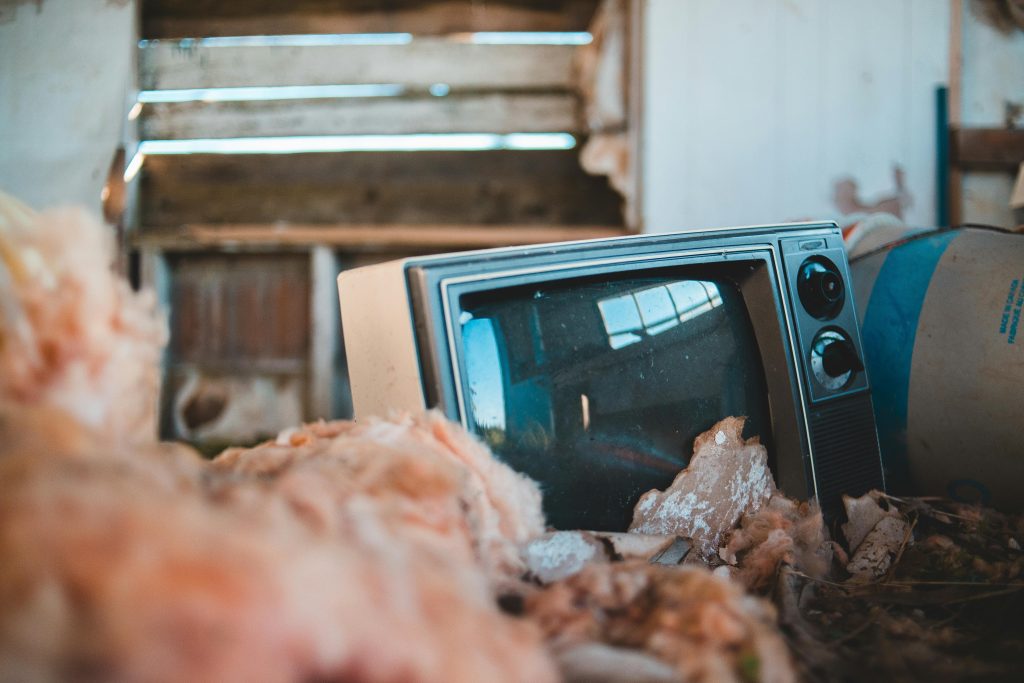
An important factor to consider about Warner’s decline is that it’s not all their fault. A lot of it has to do with the industry they are in: traditional media. Since Warner is a traditional media company, what happens in that industry is going to affect them. As well, what has been happening is not pretty. Traditional media has been on the decline for over a decade now, and it does not seem its fall will stop soon. Let’s start with movies, which were Warner’s bread and butter. COVID has destroyed the box office, with failures and underperformance being common. Since the revenue of most films relies most on the box office, it has not boded well for studios. Even before the pandemic, there were problems. These included original movies becoming rarer and franchise films being overabundant. There was also the rise of competition from other platforms like streaming.
This issue leads into the next sector to suffer: television. To start, people have been cutting cable for years now. With that, the problem only seems to get worse as more studios move to streaming, like Warner. Yet TV shows have managed to eek out an existence thanks to being better suited for the streaming age. This aspect does not help them with competition, though. Not only do they have to compete with other streaming series, but they also have to compete with old shows. Even independent content made by YouTube is a threat.
This does not count how other entertainment mediums, like video games, factor into the competition. As well, how lacklustre physical media sales impact the show’s revenue. We have seen both these phenomena occur at Warner, with their failing DCEU lineup, or their attitudes towards their cable channel. It also seems that this behaviour will not lighten up under Zaslav.
There are also other factors to consider, such as the rise of private equity. Private equity’s focus is on making businesses profitable. This goal can mean cost-cutting measures which reduce creativity. It also leads to other factors that can reduce the quality of the products the studio makes, if it means getting profits. You can see this with how poorly Warner has managed the DCEU. The studio changes the franchise’s direction depending on what they think could make the most money.
These actions have not done them any favours to fans, and the mainstream does not care either way. Hence, it leads to these films bombing, and Warner getting deeper in the gutter. They are not the only studio feeling this, however. Disney and Columbia have also taken similar actions and are also faltering. It is that with Warner being constantly brought up and spit out, that it leads to them being more volatile in these situations. They would also experience many more of these situations as they were about to merge once again.
Warner Bros. Merges With AT&T
By the mid-2010s, the writing was on the wall for the death of traditional media. Seeing this, Warner decided that it had to merge again to survive. It found a partner with AT&T, a major telecommunications company. Both had something that could be provided from the merger. AT&T would get a better advantage at advertising, while Warner would get customer data to better tailor content to customer interest. Both companies were also very old and wanted to get an edge in their markets. With these similar interests, it seemed that such a relationship could pan out. However, issues soon became clear. When the merger was first announced, for example, shareholders were mad about the merger cost. Many were also doubtful that AT&T could even manage a company like Warner. Their stock price even went down, which does not happen with mergers. Meanwhile, potential competitors’ stock prices (like Netflix) remained steady.
Problems also persisted after it finished, with Warner execs leaving the company soon after. This problem, with other issues like rising debt, led to AT&T trying to sell off Warner in 2021. In only three years, the company was already looking for another buyer. Looking back on the merger, there are some obvious parallels between this and the AOL merger. Both companies had cultures that were different from one another. Alongside that, the company that merged with Warner had little idea about the entertainment industry. Without that knowledge, it was not able to integrate such into its services. This was further compounded by the fact that the studio’s output had been less than stellar.
This was due to the burden of the mediocre DC extended universe. In an attempt at competing with the Marvel Cinematic Universe, Warner decided to rip it off with Zack Snyder managing it. Snyder was an OK director who had recently fallen into a run of mediocre releases. Nevertheless, he headed the project. His subsequent work on Man of Steel and Batman V. Superman was controversial and did not light up theatres like WB had hoped. He then left during Justice League’s production. With his leaving, the whole project devolved into executive meddling, with little identity or success to come across.
While there were hits with Wonder Woman and Aquaman (with Aquaman being the only movie to make over $1 billion), failure was more common. From there, it would only get worse with the pandemic. COVID destroyed theatres and the box office revenues that companies needed. With all this money lost, it seemed that it was best for Warner to be for sale. Although if they thought things would get easier from here, they were sorely mistaken.
Warner Bros. Today (Under Discovery and Zaslav)
After a disastrous 3 years, AT&T decided that the Warner deal was not worth it and wanted a way out. Discovery Communications, under David Zaslav, offered to buy Warner in the Chaos. AT&T obliged and soon sold the company in 2021. As one can imagine, the sale has some strings attached. This string was the couple billion in debt that the division accrued over the years, and immediately put it into the hole. As a way of recovery, Zaslav began discontinuing shows and writing off products for tax purposes. This included Batgirl, which was shelved despite being nearly complete and about to be released. These measures also took a toll on some cartoon shows and a Looney Tunes movie about Will E. Coyote for similar purposes.
This decision angered fans and moviegoers who saw it as disrespectful. With that, it made Zaslav an enemy in their eyes (a perception that would not disappear in the upcoming years). Yet even when films did release, they often bombed more than anything. This result was especially the case with the DCEU, where every film after Zaslav took over bombed. Subsequently, it destroyed any chance of the DCEU coming back. Such controversial decisions would continue as the years progressed. This was true, especially in the gaming division. Between pulling games off Steam and the Multiverse debacle, the gaming division was hit hard.
With all these changes and cuts, Warner became hated, and investors began to lose faith in the company. The studio would lose 40% of its share price value a year after Zaslav took over. Yet despite these setbacks, some glimmers of hope came around. Smiling Friends became a hit for Adult Swim, and films like Barbie and Dune Part 2 have become bores, which stabilized the company. Yet with the large amount of debt, alongside the many failures, these efforts won’t be enough to bring Warner back anytime soon. It will take much longer yet, and the solutions may become more drastic than they already are.
Conclusion
A few weeks before I wrote this, Warner released a new Looney Tunes movie with little fanfare. In what seems like an effort to tank the property, the film had a limited theatrical run with little marketing. From this “effort” obviously came failure. Then came rumours that Warner plans to sell the Looney Tunes property to the highest bidder. At the same time as this controversy, Warner released the mediocre Minecraft movie. A movie which is now close to grossing a billion dollars on the backs of stupid teens and stupid memes. These two actions signal to me just how far Warner has fallen. The fact that the company is OK with selling one of its most iconic brands, while also creating a garbage video game movie for the masses to meme on, is a tragedy that is too perfect for a Hollywood script.
To see a beloved studio get gutted, sold, and turned into a slop factory infuriates me. Especially so in this day of mindless consumption, where people do not care about quality. Yet even as we blame the current leadership for this problem, this song and dance is nothing new for Warner. Hell, they have been through the ringer so many times that you can even make an HBO Miniseries about it. Jokes aside, though, what all of this has demonstrated to me is why splitting and selling yourself to other businesses can destroy you and everything you created. Businesses do not care about you or your properties unless they can make money. As well, they are more than willing to sacrifice artistic merit and preservation for a few measly dollars.
We have seen this with Warner not just today, but in years and decades before. The company was selling its library as early as the 1950s. Yet, with Looney Tunes, and maybe even DC, about to go for sale, it seems as if the soul that once made Warner might be on the market as well. With that, the company will devolve into a slop factory like many other studios in Hollywood. In conclusion, if you want to preserve something, keep it to yourself. You know it, and you care for it, which can not be said about others most of the time.
Check out other great entertainment articles on Blu-ray Bros.com:
The Animated Adventure Films Trend of the Early 2000s – BlurayBros
Why are The Oscars So Irrelevant Now? – Blu-Ray Bros.
Check out the Blu-ray Bros. YouTube channel for more entertainment content:
http://www.youtube.com/@BlurayBros
Follow Us on Twitter: